About

We bring scientific thinking into real systems.

Asopel is a technology company founded by Fırat Durak. We are building the company around a real identity, clear boundaries, and work that can be verified.

Why this company exists

Asopel was founded to use the connection between scientific thinking, software, and system building on real problems. Instead of presenting a large idea as a product immediately, we define the question to answer and the evidence that would be enough.

  • Separate a model from a result, a prototype from a product, and a direction from current capability
  • Review ownership, publication rights, claims, and technical status
  • Divide uncertainty into small, verifiable steps

We say what works, what was tested, and what is still an idea.

We cannot show you client counts, references, or outcomes — and we never will be able to. What we can do is write down what exists, the stage it is at, and what it is not today.

FIG. 01 · Project

Bilingual site foundation

Keeping one company’s story consistent across languages.

This site’s content model, route structure, and release checks are part of Asopel’s own working infrastructure.

Maturity: Live

This is Asopel’s working infrastructure, not a general-purpose product.

Evidence
Evidence
A live bilingual Next.js application with automated static checks.
Next test
Carry the content and release controls into new business areas.
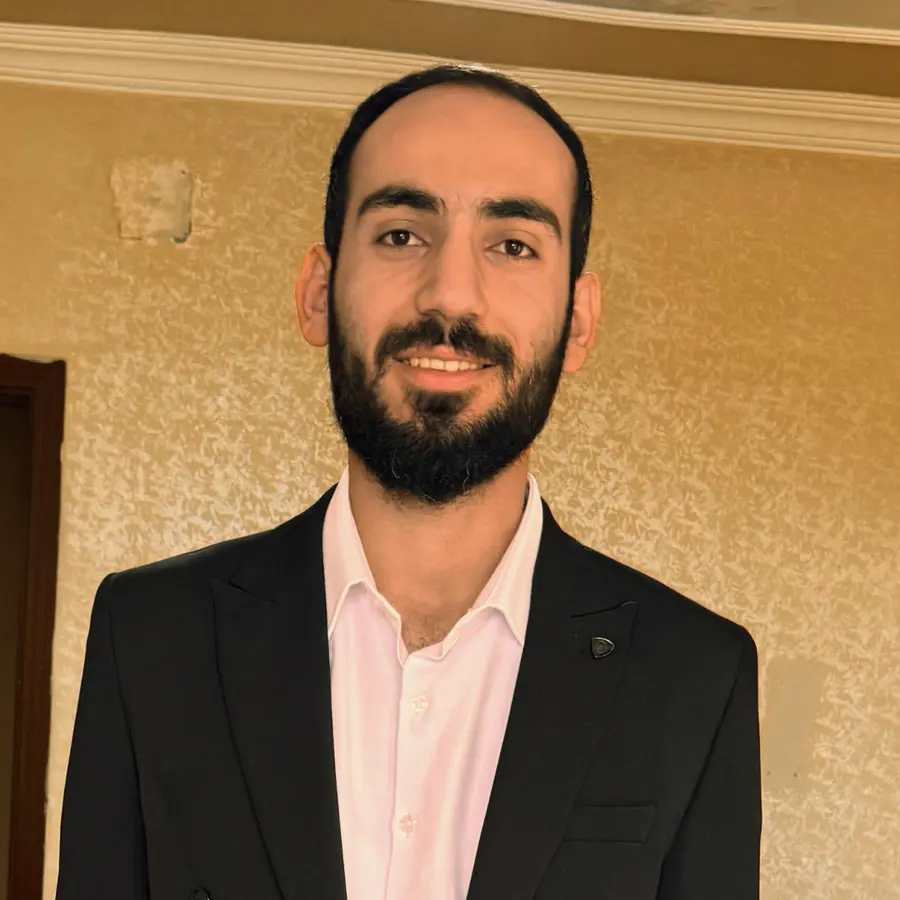
FIG. 02 · Demo

Synthetic operations system

Making scattered events and constraints visible as a decision flow.

An interactive prototype showing how an operational system can be observed without using a real client’s data.

Maturity: Prototype

Open the operations system

Available in the lab for inspection; it is not a production service or ready-made product.

Evidence
Evidence
Deterministic synthetic data and state transitions running in the browser.
Next test
Test which problem classes could become a real feasibility engagement.

FIG. 03 · Method

Evidence workspace

Keeping assumptions, sources, and limitations visible in technical work.

An internal method for keeping source, assumption, test, and limitation notes in one working flow.

Maturity: Internal

An internal working method, not an independent software product.

Evidence
Evidence
Internal documentation and repeatable review checklists.
Next test
Define a safe sharing format for client feasibility work.

One method, applied to many problems.

What lets one company move between a hotel’s booking flow and a food production question is not a long service list. It is that both go through the same five stages, in the same order.

  1. Research

    We separate the problem, the current workflow, the decision points, the constraints, and what nobody knows yet. Sources are written down.

  2. Model

    We measure the uncertainty: a small data study, a model, a prototype. Assumptions and the range they hold over go in writing.

  3. Build

    We turn the approved scope into a working system. Tests, documentation, and handover are part of the scope, not extras.

  4. Measure

    We measure what the thing we built actually does — and we say where we could not measure. “Unknown” is a result, not a failure.

  5. Stay

    We do not leave when the build ends. The monthly partnership carries maintenance, improvement, and a defined amount of build time. This is the relationship Asopel is actually built for.

When a project needs something I cannot do

When a project needs a capability I don’t have, I tell you before you sign — and I tell you how I’ll close it: a paid research phase, a named specialist partner, or building the capability myself.

Responsibility to people and the Earth is how we work, not a separate service.

We make that responsibility visible in page weight, data need, ownership, and measurement decisions.

  • Smaller pages, less transfer

    We measure page weight and request count, then remove unnecessary transfer.

  • No tracking bloat

    We do not add tracking layers that the work does not require.

  • Durable systems that do not need rebuilding

    We make delivery, ownership, and maintenance decisions explicit so the system can evolve without a rewrite.

  • We do not promise what we cannot measure

    We do not turn an environmental or operational result into a marketing claim without evidence.

Boundary

Without a defined method, we do not sell resource-reduction consulting or promise a saving or environmental result.

Portrait photograph of Fırat Durak.

Fırat Durak

Founder, Asopel

Who is behind this approach

I am Fırat. I started Asopel to use the connection between scientific thinking, software, and system building on real problems.

Rather than present an idea as a large promise, I prefer to make the assumption being tested and the working output visible.

Asopel is one person today, growing by adding people as work arrives. I do not describe a team that does not exist.

Education
BSc, Molecular Biology and Genetics — İstanbul Medeniyet University
Operator and contact details
Responsible person
Fırat Durak
Location
Türkiye
Phone
+90 544 385 87 20
Email
tech@asopel.com

What the name means

I named the company Asopel, from the Kurdish word for the wave of the east. I wanted the place I come from and the work I do to sit in the same name: a wave arrives from far away, and changes something when it reaches the shore.

  • The wave of the east
  • The founder’s own words
  • A name, not a credential

Future directions, not products today.

These records show problem classes we consider worth pursuing. Each remains labelled as a direction and states its present boundary and the validation required before any stronger claim.

  1. FIG. 01

    Reusable operational systems

    A system direction in which a shared core can adapt to each organisation's rules, data, and ownership.

    Maturity: Direction

    It is not a product sold, supported, or priced today, and it makes no client-outcome claim.

    Next validation: Validate the problem class, installation boundary, and ownership through a paid feasibility study on a real problem.

    What would be examined
    Problem
    Solving similar data and workflow problems from scratch for every organisation.
    What would be examined
    • Defined problem class
    • Synthetic example
    • Authority and data boundary
  2. FIG. 02

    Verifiable Digital products

    A direction for publishing Asopel products only when a specific user, working output, evidence, and present boundary are written together.

    Maturity: Direction

    No Digital product is published today; this entry is not a product announcement.

    Next validation: Validate the first product with an inspectable release that meets all four Digital ledger criteria.

    What would be examined
    Problem
    The gap between a product idea and a working product that can be inspected.
    What would be examined
    • Specific user and problem
    • Inspectable working output
    • Evidence, boundary, and maturity label
  3. FIG. 03

    Applied-science collaborations

    A direction for bounded joint feasibility work with a data owner and domain expert in food, agriculture, biotechnology, or environmental systems.

    Maturity: Direction

    Claims no laboratory, field, or regulatory authority and promises no scientific or environmental result.

    Next validation: Run one bounded joint feasibility study on a measurable question with a qualified domain partner and data owner.

    What would be examined
    Problem
    Domain knowledge, data, and computational method do not meet in one validation plan.
    What would be examined
    • Shared research question
    • Data and authority ownership
    • Measurement and validation plan

Let’s review the technical side of your business.

Business review